How Much Does YouTube Pay Per View in 2026? Complete Guide to YouTube Earnings, RPM, CPM, AI Video Rules & Monetization Mistakes
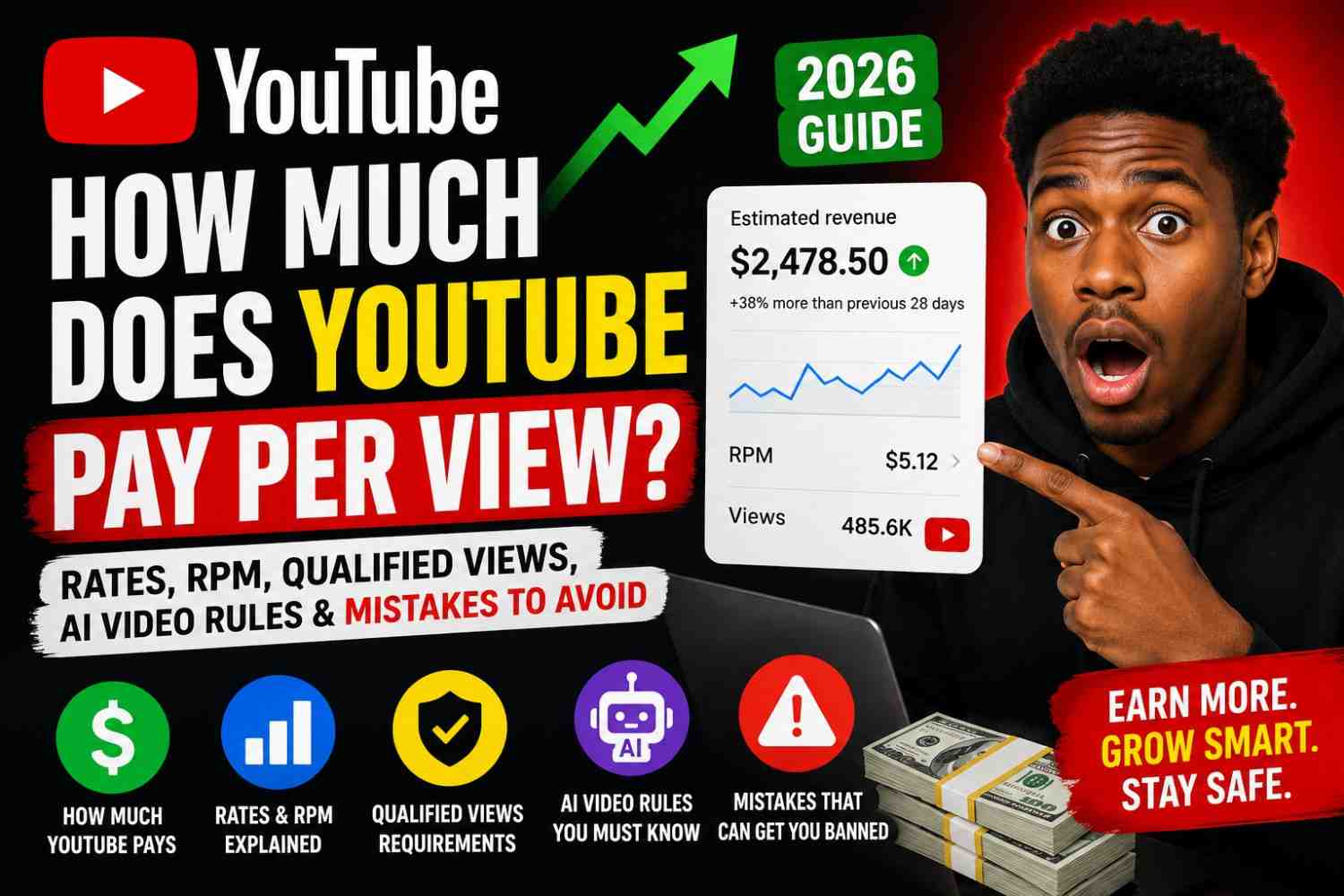
One of the most common questions new content creators ask is: "How much does YouTube actually pay per view?" Many beginners believe that YouTube pays a fixed amount for every single view, but that is not how the platform works. YouTube does not simply pay "per view." Instead, payments depend on multiple factors including:
- Country of viewers
- Audience demographics
- Advertising rates
- Content category
- Watch time
- Audience engagement
- Advertiser demand
- Monetization eligibility
Two channels can both receive 100,000 views and earn completely different amounts. One creator may earn $30 while another creator earns $500 or more from the same number of views. This guide explains everything creators should understand before trying to make money from YouTube.
Does YouTube Pay For Every View?
No. YouTube mainly pays creators through advertisements shown to viewers. Not every view contains an advertisement. Examples include:
- Users using ad blockers
- Viewers with YouTube Premium
- Videos with limited ads
- Regions with low advertising demand
- Videos not suitable for advertisers
This means your total views and your monetized views are often very different.
Important YouTube Terminologies Every Creator Should Know
1. CPM (Cost Per Mille)
CPM means the amount advertisers pay for every 1,000 ad impressions. Example: If advertisers pay:
$15 CPM
It means advertisers spend approximately $15 for every 1,000 ad views. YouTube shares part of this revenue with creators.
2. RPM (Revenue Per Mille)
RPM means your actual earnings after YouTube takes its share. This is usually lower than CPM. Example:
CPM = $15 RPM = $5
The RPM is what creators normally care about because it reflects actual money earned.
3. Monetized Playback
This means a viewer watched your content and ads were actually displayed. Not all views become monetized playbacks.
4. Watch Time
The total amount of time viewers spend watching videos. Watch time heavily affects recommendations and monetization eligibility.
5. CTR (Click Through Rate)
CTR measures how often users click your video after seeing its thumbnail. Higher CTR can increase growth.
Average YouTube Rates In 2026
Below are estimated average ranges. Actual earnings vary greatly.
| Content Type | Estimated RPM |
|---|---|
| Entertainment | $1 – $4 |
| Gaming | $2 – $6 |
| Technology | $5 – $15 |
| Finance | $10 – $40+ |
| Business | $8 – $30+ |
| Education | $4 – $12 |
Example calculations: 10,000 views at $3 RPM: ≈ $30 100,000 views at $5 RPM: ≈ $500 1 million views at $4 RPM: ≈ $4,000
Requirements To Qualify For YouTube Monetization
YouTube has eligibility requirements before creators can earn from ads. Current common requirements include:
- At least 1,000 subscribers
- 4,000 valid public watch hours in the last 12 months
- OR Shorts viewing requirements
- Two-step verification enabled
- No active community guideline strikes
- AdSense account linked
- Original content following YouTube policies
Common Mistakes That Can Remove Monetization
Many creators focus only on getting views and ignore policy violations. Some common mistakes include:
1. Reused Content
Uploading content copied from others with little modification can cause monetization rejection. Examples:
- Compilation videos without transformation
- TikTok reposts
- Movie clips
- Downloaded videos
- Copied podcasts
2. Spam Uploading
Publishing large amounts of low-quality repetitive videos can trigger review problems.
3. Fake Engagement
Avoid:
- Buying subscribers
- Buying views
- Buying comments
- Artificial watch time
4. Misleading Thumbnails
Clickbait can damage audience trust and hurt channel performance.
5. Copyright Violations
Repeated use of copyrighted music, videos, TV clips, or images can lead to strikes and revenue loss.
New AI Video Rules Creators Must Remember In 2026
Artificial intelligence has changed content creation completely. Many creators now generate:
- AI voices
- AI images
- AI animations
- AI scripts
- AI video generation
Using AI itself is not against YouTube rules. However, YouTube focuses heavily on transparency and originality.
Important AI Rules
- Disclose realistic altered or synthetic content when necessary
- Avoid fake news and deceptive AI edits
- Do not impersonate real people misleadingly
- Do not mass-produce identical low-quality AI videos
- Add personal creativity and editing
- Avoid automated spam content
Many creators wrongly assume: "AI-generated content automatically makes money." This is false. YouTube evaluates whether content adds value. Channels that simply generate thousands of nearly identical AI videos may face reduced recommendations or monetization problems.
Good AI Content Examples
- AI-assisted educational videos
- Storytelling with original editing
- Documentaries
- Explainer channels
- Tutorial content
Risky AI Content Examples
- Thousands of identical slideshows
- Repeated AI voices with no editing
- Mass-generated fake celebrity videos
- Misleading AI news content
Additional Ways YouTubers Make Money Beyond Views
- Brand sponsorships
- Affiliate marketing
- Selling products
- Course sales
- Channel memberships
- YouTube Premium revenue sharing
- Super Chats
- Website traffic monetization
Large creators often earn more from sponsorships than from ad revenue itself.
Frequently Asked Questions
How much does YouTube pay for 1,000 views?
Usually between $1–$20+, depending on audience and content category.
How much does YouTube pay for 1 million views?
Anywhere from a few hundred dollars to several thousand dollars.
Can AI videos earn money?
Yes. AI videos can be monetized if they provide original value and follow YouTube policies.
Does YouTube pay immediately?
No. Earnings accumulate and are paid through AdSense once payment thresholds are reached.
Final Thoughts
YouTube is no longer simply a video platform. It has become a complete digital business ecosystem. Instead of chasing views alone, creators should focus on creating useful content, building audience trust, maintaining originality, and following platform guidelines. Whether you create videos manually or use AI tools, long-term success comes from delivering real value to viewers. Views bring attention. Trust creates income.